
TERRACE | BEST IN LANDSCAPE LIGHTING | MAX your moment
Why Chose Low Voltage Landscape Light In Garden Lighting Design

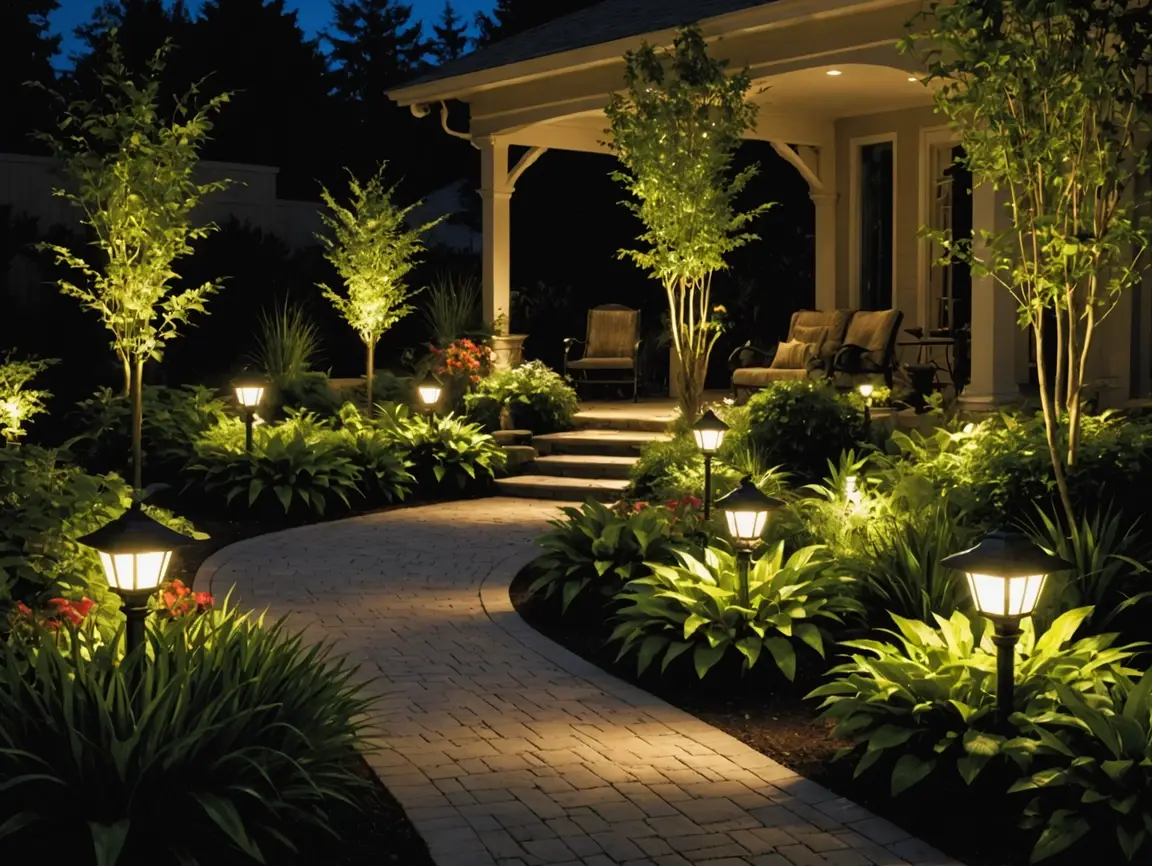
In landscape lighting design for courtyards and gardens, the use of low-voltage lighting fixtures (typically 12V or 24V LED lights) is a common and professional choice. This decision is based on a comprehensive consideration of safety, energy efficiency, design flexibility, and light quality. Below is an analysis of the main advantages and disadvantages of low-voltage lighting.
I. Advantages
- High Safety
- Very low risk of electric shock: Voltages of 12V/24V fall within the Safety Extra-Low Voltage (SELV) range. Even if there is direct human contact or accidental cable damage, it will not cause fatal electric shock, making it particularly suitable for damp or water-prone areas in gardens (e.g., near ponds, lawns, or irrigation zones).
- Reduced fire hazard: Low-voltage circuits generate minimal heat, and short circuits are less likely to cause fires. This makes them suitable for burial in the ground or installation near plants.
- Energy Efficiency and High Performance
- Modern low-voltage lighting typically uses LED technology, consuming only 10%–20% of the energy of traditional low-voltage halogen lamps while providing higher luminous efficacy.
- When combined with smart control systems (such as dimming, timers, or sensors), energy savings can be further enhanced.
- High Design Flexibility
- Compact fixture size: Low-voltage LED fixtures can be made small and discreet, making them easy to conceal—ideal for landscape designs that emphasize “seeing the light, not the fixture.”
- Relatively flexible wiring: Low-voltage cables do not require strictly sealed conduit protection (though waterproof insulation is still necessary), making installation easier in complex terrains or among plants.
- Easy modification and upgrades: Low-voltage systems are often modular, allowing for easier future additions or repositioning of fixtures.
- Superior Light Quality Control
- Precise light distribution: Low-voltage LED fixtures often include optical lenses that accurately control beam angles, reducing light pollution and highlighting focal points (e.g., sculptures, trees).
- Excellent color rendering: High-quality low-voltage LEDs can achieve a Color Rendering Index (CRI) of 90+, accurately reproducing the colors and textures of plants and stone.
- Flicker-free operation: Driver designs more easily achieve stable current output, avoiding flicker that can affect visual comfort.
- Long Lifespan and Low Maintenance
- Low-voltage LED fixtures can last 30,000–50,000 hours. The lower voltage also reduces stress on wiring and components, enhancing system stability.
- In outdoor environments, low-voltage systems are more resistant to moisture and corrosion, reducing failure rates.
II. Disadvantages
- Higher Initial Investment
- Requires additional waterproof transformers or switching power supplies. High-quality low-voltage fixtures and outdoor-rated cables (e.g., double-insulated waterproof wires) also come at a higher cost.
- For large garden areas, multiple transformers may be needed for different zones, increasing equipment costs.
- Limited Transmission Distance
- Voltage drop is an issue with low-voltage systems: over long cable runs, the brightness of fixtures at the end of the line may decrease (especially with 12V systems).
- Solutions include calculating voltage drop, using thicker cables, opting for 24V systems, or setting up multiple power zones.
- Requires Professional Installation
- Careful planning is needed for transformer placement (usually concealed and well-ventilated), load capacity calculations, and proper waterproof connector installation.
- Improper installation can lead to voltage instability or fixture damage.
- Power Limitations
- Low-voltage systems have limited single-circuit capacity (typically ≤200W), making them unsuitable for areas requiring high-intensity illumination (e.g., large plazas). Multiple circuits may be necessary.
- Compatibility and Dependency on Components
- Fixtures must match transformer voltage specifications, and dimming systems require compatible low-voltage dimmers (e.g., PWM dimmers).
- Some low-cost transformers may cause electromagnetic interference, affecting sensitive electronic devices.
III. Recommended Applications
- Prioritize low-voltage lighting for:
- Residential courtyards, garden pathways, waterscapes, and children’s play areas;
- Applications requiring concealed installation, such as wall washers, tree uplights, and in-ground fixtures;
- Scenarios where safety, energy efficiency, and frequent dimming are emphasized.
- Consider high-voltage (220V) lighting for:
- Large plazas, parking lots, or other areas requiring high-intensity illumination;
- Locations with long transmission distances (>30 meters) where transformers cannot be installed nearby;
- Budget-limited projects with lower safety requirements (strict waterproofing and insulation standards must still be followed).
IV. Key Design Recommendations
- Zoned Power Supply: Divide the area into zones based on lighting needs, each with its own transformer to prevent voltage drop.
- Choose High-Quality Transformers: Prioritize outdoor-rated, waterproof transformers with efficiency >90% and overload protection.
- Cable Gauge Calculation: Select sufficiently thick cables based on power and distance (e.g., 2.5 mm² or larger for 12V systems).
- Lightning Protection and Grounding: Low-voltage systems still require proper grounding. In lightning-prone areas, consider installing surge protection devices.
With careful design, low-voltage lighting can significantly enhance the safety, aesthetics, and overall experience of courtyard landscapes. It is particularly well-suited for residential and commercial projects that prioritize detail and long-term usability.