
TERRACE | BEST IN LANDSCAPE LIGHTING | MAX your moment
The Backbone of the Yard and the Eyes of the Night: America’s Unique POST and POST LIGHT

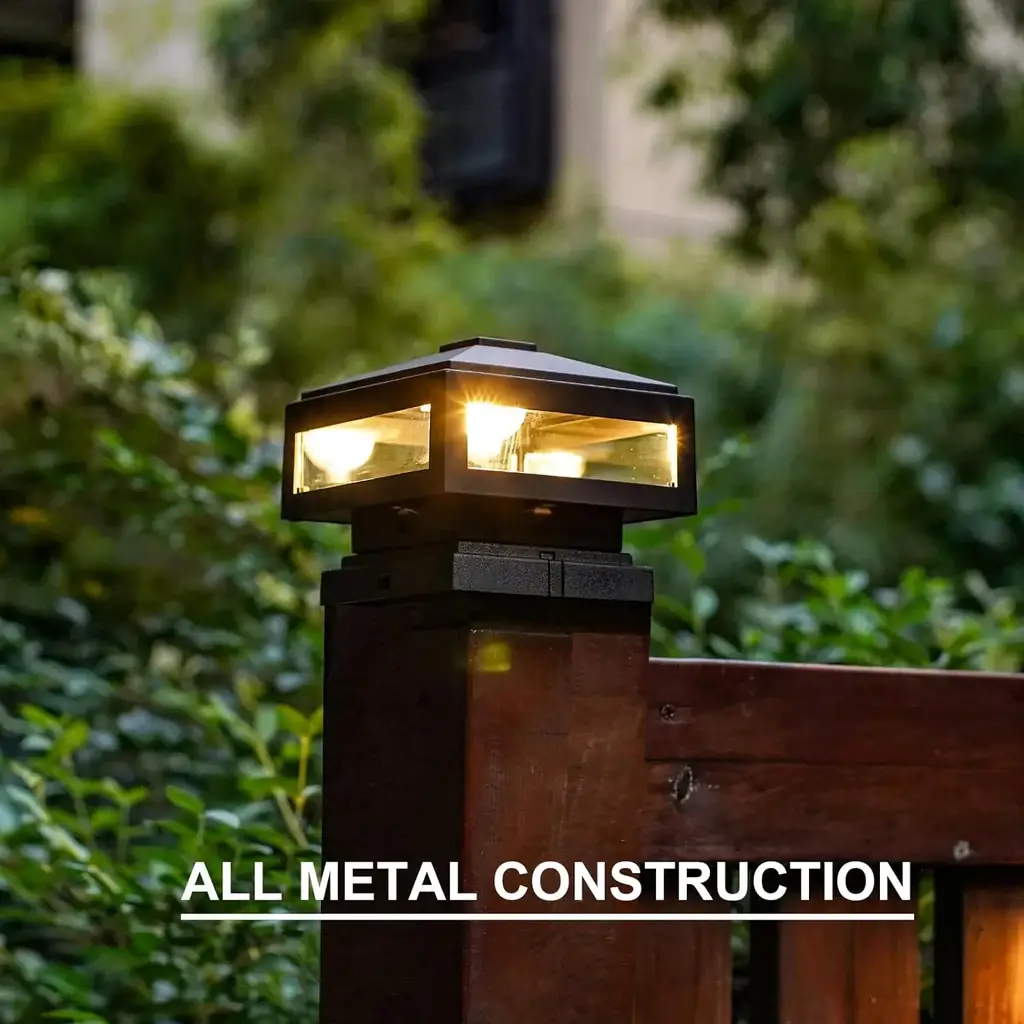
I. POST: The Backbone of the Yard
What is a POST?
Simply put, it’s a vertical structural member driven deep into the ground, serving various functions. It comes in three main forms:
- Fence POST
Erected every 8–10 feet, these are the skeleton of the classic American wooden fence. Typically made from pressure-treated Southern Yellow Pine or Western Red Cedar, with a 4×4-inch (approx. 10×10 cm) cross-section, they are buried to a depth of one-third their total length. These POSTs not only mark property boundaries but also create a “neighborly courtesy line”—maintaining a degree of privacy without completely isolating the home from the community. - Lighting POST
Standing independently at driveway entrances, along walkways, or in the center of lawns, these are usually 6–8 feet (approx. 1.8–2.4 meters) tall. Their materials have evolved from traditional wood to modern composites and aluminum, making them the visual metronomes of the yard. - Structural POST
Supporting pergolas, arbors, or porch roofs, these POSTs are sturdier (6×6 inches or larger) and serve as load-bearing columns for outdoor “rooms.”
Why is the POST so “American”?
- The scale of spacious living: Single-family homes typically sit on 0.25–1 acre (approx. 1,000–4,000 sq. meters), requiring clear spatial definition.
- A vehicle for DIY culture: Retailers like Home Depot have popularized standardized POSTs and installation kits, making them accessible projects for everyday homeowners.
- The physical expression of property consciousness: Clear, aesthetically pleasing boundaries are a tangible manifestation of American homeownership culture.
II. POST LIGHT: The Grammar of Night
When a light fixture is mounted atop a POST, it completes the transformation from structure to poetry.
The Evolutionary Trilogy:
- The Gaslight Era (late 19th–early 20th century): Cast iron posts with glass shades, mimicking European urban lighting.
- The Electrification Era (mid-20th century): Aluminum posts with rust-proof powder coatings and clean, simple designs.
- The Smart LED Era (21st century): Integrated solar panels, motion sensors, adjustable color temperature, and smartphone control.
A Tour of Classic Styles:
- Colonial Style: White wooden post + black metal lantern—a hallmark of New England.
- Ranch Style: Rough wood or stone post + copper shade—evoking the Western ranch aesthetic.
- Craftsman Style: Square wooden post + mica glass shade with geometric cuts—embodying artisanal craftsmanship.
- Modern Style: Square aluminum post + integrated LED light strips—featuring minimalist lines.
III. Installation Philosophy: The Seen and Unseen Wisdom
Professional installation follows a set of invisible rules:
- The Depth Rule: Fence POST burial depth = 1/3 of above-ground height + 6 inches (approx. 15 cm) of gravel for drainage.
- The Spacing Aesthetic: Lighting POST spacing = 2–3 times the post height, creating a rhythmic sequence of light pools.
- The Concrete “Boot”: Each POST is set in a 12-inch diameter concrete footing to prevent frost heave damage.
IV. Cultural Symbolism: From Utility to Meaning
The lighting of a POST LIGHT carries special cultural significance in America:
- A “We’re Home” signal: Turning on the post light at dusk is a common suburban practice.
- A balance of safety and welcome: Bright enough to indicate presence, yet never as harsh as commercial lighting.
- A vessel for holiday spirit: Wrapped with string lights for Christmas, adorned for Halloween—the POST LIGHT becomes a stage for seasonal transformation.
V. Future Trends: Where Tradition Meets Technology
- Energy Independence: Solar-powered POST LIGHTS with integrated photovoltaic panels are already widespread in sunbelt states.
- Smart Networking: Group control and scene automation via Zigbee or Wi-Fi networks.
- Material Revolution: Composite POSTs made from recycled HDPE plastic, guaranteed against rot for 50 years.
- Ecological Integration: POSTs with built-in insect hotels or bird nesting boxes, allowing functional structures to support biodiversity.
VI. A Cross-Cultural Perspective: Why Is This “Uniquely American”?
Compared to other cultures:
- European gardens: More often feature ancient boundaries like stone walls or hedges.
- Japanese gardens: Philosophically employ natural materials like bamboo fences or living hedges.
- Australia: While also having a fence culture, POST LIGHTS have not developed into such a complete industrial ecosystem.
The American POST culture essentially represents: An industrialized, standardized, and democratized solution to traditional boundary and lighting needs on private land, infused with aesthetic expression.
Conclusion: A Declaration Standing Firmly on the Earth
From the Colonial white posts of the East Coast to the modern metal posts of the West Coast, POSTs and POST LIGHTS tell the same story: How Americans establish clear personal domains on vast land while maintaining connections to community and nature.
By day, they are the yard’s silent punctuation; by night, they are warm gazes—looking inward toward home and outward toward neighbors under the stars. In the foreseeable future, these posts standing in the yards of the American Dream will continue to evolve, but their core meaning will remain unchanged: Here, we take root. Here, we shine.
Next time you watch a suburban scene in an American movie or TV show, pay attention to these silent posts. They are more than just set pieces—they are a key to understanding the philosophy of American living: about boundaries, about light, and about how one exists independently on the land while gently announcing that existence.